
The Parts We Hide: How to Heal, Reclaim, and Embrace the Hidden Parts of Yourself

Updated: May 5
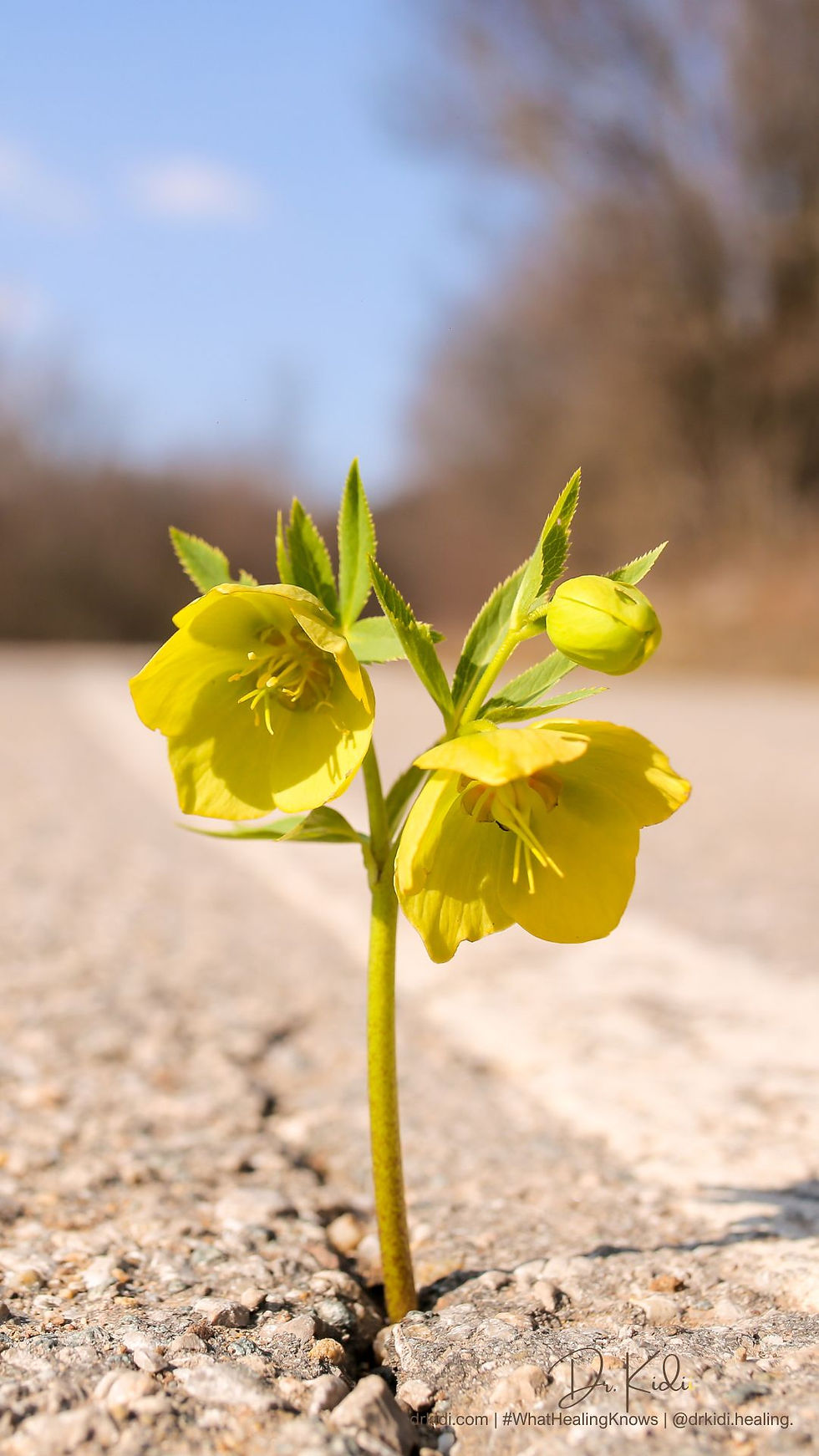
SEGMENT 2: RECLAIMING WHOLENESS
EPISODE 2
The Parts We Hide
In the choices we make to fit in, we drift from ourselves, little by little.— Dr. Kidi
The Quiet Disappearance
It does not happen all at once.
You do not wake up one morning to find that you no longer belong.
It happens quietly, in the slow accumulation of small choices.
The moments when you smile instead of speak.
When you agree instead of asking a question.
When you stay silent to keep the peace.
As the Amharic saying goes, “Weha siwosd eyasasake new” — the water takes you while making you laugh. And so, without noticing, you drift.
Not because you meant to leave yourself behind, but because the current was gentle and you mistook its comfort for belonging and peace.
We learn early which tones bring comfort, which expressions earn approval, which gestures make us welcome, and which parts of our story must stay hidden, not to protect what is true, but to protect pride, our own and that of others.
At first, the art of fitting in feels harmless, even graceful. But over time, these small edits take root. We learn to trim our emotions and conceal the parts of ourselves that do not fit the version others want to see.
In Amharic, there is one word that captures this perfectly: Ye-lugn-ta—what will people think? It holds in a single phrase the quiet fear that shapes how we move through the world.
I remember my turning point hidden within those familiar acts.
At seventeen, I had only ambition. I wanted to wear the white coat, walk the still corridors of hospitals, and learn the language of the body and the art of healing. I had no map, no mentor, no safety net, only faith in the process.
Community college by day, work by night. Borrowed time, saved dollars, handwritten applications sealed with hope before digital portals replaced the wait by mail. Each envelope I sent carried a small hope that I belonged in a healing space.

I carried a small silver keychain with the Rod of Asclepius, the serpent coiled around the staff, the ancient emblem of healing. It was my version of actor Jim Carrey’s ten-million-dollar check in his pocket before he became famous, a tangible promise of what I believed would one day be real.
Then I arrived, a doctor at last. Years of discipline and dreaming had brought the vision to life. Each success felt like another doorway to belonging. I kept walking through them, hoping the next one would be the place where I could rest and finally feel enough.
But the truth was quieter.
Even as I stood where I had once only dreamed, I could still hear the whisper that there was more to prove.
You might be thinking, “I’ve always felt like I belong.”
If that is true, then you have found something rare. Your body can breathe without the strain of searching for where you fit. In that space, your whole being moves in harmony with itself.
But remember, the absence of belonging reveals itself in quiet ways. A slight shrinking, a careful tone, a softened truth, a need swallowed before it can speak, a smile held too long. These gestures take different forms, but they share one purpose: to guard us from the courage of being seen as we are.
You may think, “Sometimes we hide parts of ourselves as a bridge to the place where we can finally stand whole.”
That is true.
Even those who seem most certain carry this quiet burden, the weight of becoming while pretending they have already arrived. When the former First Lady Michelle Obama reflected on her years in the White House, she shared that she chose not to wear braids because she sensed the country was not ready. She did not want her hair to speak louder than her work.
My daughter, like many young girls of color who once wrote to her asking why, realized that even the First Lady, brilliant, accomplished, and powerful, had to set aside a part of herself to belong. It was not vanity. It was survival. But it came at a cost. It took something from her and from the young girls who saw that even she had to hide a part of herself.
Hiding parts of who we are can be human, even necessary at times as a bridge, a temporary and intentional act that helps us enter new spaces where we can uplift ourselves and others. It is intentional, and it has an endpoint.
You may think, So I can say and do whatever I want if it’s part of what I’ve been hiding.
No, you cannot. Wholeness is rooted in goodness, and reclaiming it honors the unspoken agreement we share as humans: to treat others as we wish to be treated.
But shrinking to cover pain is something different. It is not a choice but a reflex, a wound disguised as safety, calling not for endurance but for healing.
Let’s pause for a moment of honest reflection, to see if parts of who you are have quietly gone into hiding.
Ask Yourself
Do I edit my words, afraid of saying too much or the wrong thing?
Do I shrink myself to how others feel so they can feel better?
Do I pretend to share someone’s struggle so they feel less alone?
Do I overexplain or apologize to justify my presence?
Do I say sorry for needing rest or taking up space?
Do I hide my struggles to appear composed?
Do I seek validation before trusting my own voice?
Do I downplay my strengths or deflect praise?
Do I change my tone to blend in?
Do I still feel like an outsider, even when I am invited in?
If you answered yes to any of these, you may have learned to shape yourself to survive, to protect, or to belong. Yet in doing so, you may have buried the very parts that make you whole.
This is the quiet cost of unintentional self-suppression, born from the belief that authenticity is unsafe.
Reclaiming wholeness begins by noticing where the drift began, the moment you chose safety over truth or approval over presence. If that choice no longer serves your becoming, release it, and let yourself return to the wholeness that has always been yours.
The Origin of Hiding
Every disappearance has a beginning.
We begin open, curious, and alive, crying when we are hurt, laughing when we are joyful, speaking when we have something to say.
Then, quietly, we learn that not every part of us is welcome. We start to read the room before we understand our own needs. We notice which emotions earn approval and which bring disapproval. A look, a word, a silence, a reprimand, each teaches us to tuck something away.
Be quiet.
Be polite.
Be strong.
Be easy.
And so, we hide to be loved. We perform to belong.
Each time a child hears, "Why can’t you be more like them?" a small piece of self-worth fades. Each time a patient questions whether a woman of color is a “real doctor,” belonging erodes a little more.
We call it safety, but safety built on self-suppression is a fragile peace. The more we hide, the more we drift from our inner compass. What once felt natural becomes rehearsed. We call it maturity or professionalism, but often it is practiced invisibility.
Yes, it protects us, but it also costs us our vitality. This is where fragmentation begins, the quiet split from our center. We stop asking what we need and start asking what others expect. The voice of instinct grows faint. The body still speaks, but we have forgotten how to listen.
It takes courage and tenderness to look behind the walls we built. Yet everything we have hidden waits there with a gift in its hands, asking to be seen again. What we do not face will cost us our peace, our health, and our wholeness.
The Cost of Hiding
There is a quiet kind of exhaustion that comes from hiding.
It is not the kind that rest can fix. It is the fatigue of living divided, one face for the world and another for yourself.
When we hide, we live in fragments. The outer self grows polished and composed while the inner self waits behind the curtain, unseen. At first, this feels manageable, even admirable. But over time, the weight of pretending becomes too heavy to hold.
The body begins to speak in tension.
Shoulders ache with more than the day’s work.
The chest tightens with words unspoken.
Sleep grows thin because the parts we silence stay awake, asking to be heard.
I remember a day during my residency, removing a dressing from a woman with severe burns. Her pain was sharp and consuming. Each time I moved to ease the gauze away, her body tensed, and she kept apologizing for taking too much of my time. I reassured her she was not a burden, yet every apology felt like a deeper wound. I was not angry with her. I was not in a hurry. But with the voice inside her said she did not deserve care—the same voice that lives in so many of us.
I wanted to tell her that her worry was adding to her pain, that healing asks for presence, not apology. But I knew that her urge to apologize for taking up space was not something I could heal in that moment.
Disconnection rarely arrives all at once. It creeps in quietly. Joy begins to fade, laughter feels distant, and rest no longer restores. We keep performing but feel hollow inside. The mask we once wore for protection becomes a cage. The more we hide, the less we inhabit ourselves. We call it balance, but it is drift. We feel anxious without knowing why and chase achievements that no longer bring meaning.
It is not uncommon to hear someone over fifty say, "The best thing about this age is that I do not care what others think." They walk freely, dance fully, ask for what they deserve, and take up space with ease. Meanwhile, their younger children often turn away, embarrassed by their parents' newfound freedom.
But why must it take so long to reach that peace, to feel at home in who we are no matter what others think? How can we help younger generations arrive there sooner? Because hiding costs more than emotion. Research shows that suppressing feelings increases the risk of heart disease, cancer, and early death. It raises stress, blood pressure, and slows healing. The body remembers what the mind tries to forget. My hope is that we learn to claim that freedom sooner, to protect not only our peace but also our health and joy.
Meeting the Hidden Self
The good news is that what we learned can be unlearned.
With awareness, breath, and patience, we can return to ourselves.
Healing begins when we stop running and look gently at what we hide. Some parts we conceal with purpose as we grow; others we hide out of fear. Meeting the hidden self is not about forcing truth into the light. It is about creating enough stillness to listen. When we turn inward with kindness instead of judgment, shame loosens its hold. The parts we once feared begin to soften in the presence of compassion.
Every hidden part of us was formed for a reason.
Anger once guarded our boundaries.
Fear once kept us safe.
Silence once prevented conflict.
When we meet these parts, we meet the younger selves who were doing their best to survive. They do not need to be erased, only understood.
This is where mindfulness becomes medicine.
In my own practice, I return to the Tinfash 4C Reset, a gentle way to meet the hidden self with awareness. Healing deepens through repetition. Familiar rituals become steady ground, like a prayer or mantra that guides us home.
The Tinfash 5C Reset can be practiced anywhere.
Its essence is simple: a path back to wholeness. And wholeness begins when we ask, What am I still hiding to stay safe?
Let’s Practice
Count and Pause.
Pause from what you are doing for a moment.
Count 3,2,1
Close Your Eyes
If it feels safe, close your eyes and let the outer world fade.
Only in stillness can what is hidden rise to the surface.
Count Your Breath
Each breath is an anchor.
For the next ninety seconds, follow a gentle rhythm:
Inhale for four counts.
Hold for four.
Exhale for six.
Inhale to receive what is true.
Exhale to release what no longer serves.
Twelve deep breaths are enough to steady your mind and remind you that you are safe and present.
Create Distance
Distance is not disconnection; it is perspective.
Walk Away: Step back to observe what is pulling you without becoming it.
Throw Away: Discard what you don't need.
Float it Away: Imagine placing a toxic thought on a passing cloud and letting it drift away.
When you witness your pain instead of becoming it, compassion has room to enter.
Choose
Choose with intention.
Notice what fear urges you to do, then pause and ask what your body what it needs to thrive aligned with trugh. Choose that.
Each mindful choice becomes an act of return, a small movement toward wholeness.
These five steps form a quiet ritual of remembrance. They help the body feel safe enough to open and the heart steady enough to listen. Over time, they bridge the space between the parts that live in light and the parts that wait in shadow.
The Tinfash 5C Reset is an invitation to meet yourself as you are, not as the world expects you to be. Healing does not ask for perfection. It asks for presence. When you calm and pause, close your eyes, count your breath, and create distance, you open the door for your hidden self to come home.
Integration: Returning to Wholeness
By integration, I mean the gentle process of bringing every part of ourselves back into belonging. It is the moment we stop living in fragments and begin to move as one whole being.
To belong anywhere, we must first belong to ourselves accepting all of who we are, both the parts we show and the parts we hide. Integration begins when we stop labeling parts of ourselves as good or bad, strong or weak, worthy or unworthy. To live whole is to meet it all with presence and allow both perfection and imperfection to share the same space.
The first time I saw Michelle Obama wearing braids, I felt joy. Though it came later than my daughter had hoped, it was powerful to witness her reclaim her authenticity so openly. It reminded me that returning to ourselves is both personal and collective.
No one handed me the stethoscope. I earned it. But, it took mindfulness and the willingness to look within to fill the space around me without apology, knowing that I belonged everywhere, because I do.
In this space, we will stop hiding the beauty of our wholeness and continue to reclaim it. We will let it shape how we breathe, how we speak, and how we show up in our lives. We will live without division, walk in alignment with our truth, and move through the world with honesty and grace.
There will be days when pressure pulls us away from our center. That is part of being human. Healing is not about never losing yourself again; it is about returning to mindfulness and knowing how to return and reclaim what we once pushed away and remember that every part of us still belongs. It is the practice of beginning again.

A Mantra to Carry
I am not broken. I am already whole.
Let these words settle in your body, like a hum that grows stronger each time you breathe them in.
Journal Invitation
Write a letter to your younger self.
Share how you are finding your way back to the courage, hope, and trust that once guided you.
Meditation
With that, we have begun our healing connection.
Embrace the journey. Keep listening. Healing knows the way.
Love and more love,
Dr. Kidi
More reflections at drkidi.com · Follow @drkidi.healing · Guided meditations on YouTube @drkidi Short stories on Substack @drkidi


Love this reminder - Healing starts when we stop hiding.
Your article really made me me think about some of the situations I’ve been in the past. Thank you for sharing your helpful insights.
True meaning of life begins the moment we accept our imperfections. Such a great video to listen to.
Juny
Love it!