
When Truth Feels Costly: What Silence Costs the Body

Updated: Jun 22

SEGMENT 4: HONORING THE TRUTH
EPISODE 3
When Truth Feels Costly
What Silence Costs the Body
Reflection
I sat in the back row of my Moral Studies class in middle school the day the teacher called on me.
I do not remember the question, but I remember my answer, "I am not sure that is true for everyone."
The room went still.
"Get up and come to the front right now." The voice didn't just cut through the classroom; it cracked the air wide open.
My teacher stood by the blackboard, the rhythmic tap-tap-tap of white chalk against the metal holder suddenly stopping, leaving a silence that felt heavier than lead.
I didn't look up.
I couldn't.
A sudden heat flushed from my collarbone to the tips of my ears, and cold beads of sweat pricked at my hairline where my tight braids dug into my scalp. I was about twelve, and in that split second, I ceased to be a student. I became the sacrifice.
My pencil clattered against the wood of my small desk, a startling, frantic sound in the stillness. I smoothed the burgundy fabric of my uniform skirt I had rolled at the waistband to make shorter, and slid out of my chair. My legs felt like they belonged to a stranger, clumsy and thick, as I navigated the narrow aisle. I kept my eyes fixed on my brown leather Mary Janes, hyper-aware of the thirty pairs of eyes tracking my movement.
"Wipe your mouth," she commanded, her gaze cold, the chalk still held in her hand like a weapon. "Cover it with your hands. And keep them there."
I didn't hesitate.
I knelt.
The floor was hard.
I pressed my palms against my lips and sealed my voice inside.
I knew the ritual.
I was the cautionary tale.
I was the lesson on immorality, taught by the person who held the rulebook.
I do not remember what she wrote on the board that day. I do not remember the curriculum or the moral principle she was trying to extract from the lesson. Whatever was meant to be learned, evaporated.
But I remember the sharp, biting pain of the linoleum on my knees, the wet warmth of tears tracking down my cheeks, and the lesson I learned: Truth is not something you are. Truth is something you perform.
We Carry These Classrooms With Us.
Have you ever memorized for a test without understanding what the material means? I know I have. You pass the test, but years later, not one answer remains, only the fear of getting it wrong.
We carry these classrooms with us long after we graduate. We carry the hand over the mouth. We carry the thirty pairs of eyes. We carry the lesson that the wrong answer, the honest answer, the answer that dares to say I am not sure that is true for everyone.
So we hold our truth.
We learn to read the room, edit, and offer the version of the truth that is moral. We become so practiced at it that we stop noticing we are doing it at all.
We mistake this for maturity.
We mistake it for wisdom.
We call it knowing when to speak and when to stay quiet.
We call it being professional. Being diplomatic. Being kind.
We call it moral.
But the body knows that it is a performance.
And performance is exhausting.
Every time you said what was acceptable instead of what was true.
Every time you smiled when something in you was breaking.
Every time you agreed when everything in you knew otherwise.
The body registered it.
It did not judge you for it.
It did not punish you for it.
It simply kept the record.
And the record, over time, becomes weight.
Your skin, muscles, nerves, and every organ you own begin to carry it alongside everything else they were already asked to carry. And when they can no longer carry the weight, they become ill.
That is the cost of carrying the classroom. Not what happened in it. But what the body carries because of it.
Morality Versus Humanity
Morality will not save you.
I say that carefully, and I mean it.
Morality asks: What is acceptable for others?
It is the chalk in the teacher's hand. It is an external code handed to you from outside, telling you what is acceptable so that others can see you performing correctly. It is the rulebook held by the person who decides who kneels and who stands. A verdict someone else delivers. And when morality is your only framework, you stop listening to the body's truth. Instead, you learn to manage how you are seen because truth becomes a standard to meet.
That is not your truth. That is consensus.
The right question is: what does this body know to be true, right now? That is the question humanity asks.
Because your truth is what the body says underneath every performance, every edited version of yourself you offer to the room. It was there when I was kneeling. It was there every time you spoke after deciding what the room could handle.
The body never stops communicating. It speaks quietly, persistently, in the language of sensation and symptom, asking you to pause and listen.
Humanity is the return to that listening.
It is the recognition that you are a living thing who longs to thrive. That before you are a role, a reputation, a person shaped for the room, you are a body that knows.
And when you are in alignment with your inner truth, the body functions with a clarity and ease that no external system can produce. But when you live in contradiction to what is true inside you, the body registers that contradiction. It carries it. It speaks it in the only language it has left.
Illness.
This is not philosophy. This is physiology.
When you suppress what is true, the nervous system does not rest. It stays alert, braced, managing the distance between what you know and what you are presenting. That vigilance has a cost. It interrupts sleep. It tightens the breath. It sits in the gut. It shows up in the body as a question that never gets answered.
Healing does not begin when you find the right treatment. It begins when you pause between the urge to hold your truth and the choice to live it. In What Healing Knows, we call that pause the Tinfash Healing Time.
And when you pause and choose to be your truth, you stop performing. You stop managing. You live it instead. And that living, that embodied, unperformed honesty, is what healing looks like.
Returning to yourself is returning to your truth. And when you return to your truth, you become safe for others to do the same.
Because the body's sole purpose is to thrive. And a body oriented toward its own thriving will never ask you to harm another to get there. It will never ask you to diminish someone else to feel whole. It does not work that way. The body knows that what wounds others wounds the self. What heals the self extends to others.
That is how healing moves through the world. Not through instruction. Not through correction. Through the simple, radical act of one person deciding to pause and listen to their body's truth.
That is humanity. And it begins in the body.
It always has.
This Is Not Easy.
Everything in this episode points toward listening, toward returning to the body's truth, toward the courage to stop performing and start hearing what has always been there.
But it is not simple.
Listening to your body's truth is one of the hardest practices there is because it is not just a decision you make one morning and then everything opens up.
The truth your body has been carrying has weight. It has history. It is wrapped around relationships and identities and versions of yourself you have spent years building.
Hearing it, even in the silence of your own chest, may mean grieving something. It may mean admitting that a path you have walked for years has not been yours. It may mean seeing someone you love clearly for the first time and not being able to unsee them.
The fear of what the body knows is real.
And I am not asking you to ignore the fear. I am asking you to understand what it is costing you to let the fear drown out what the body is saying before it finds other ways to be heard.
You can't carry the body's weight and remain untouched by it.
I know because I have been that child on her knees.
I know because I carried that classroom with me for a long time without knowing I was carrying it. Without knowing that every time I edited myself, every time I managed the room before I honored myself, I was kneeling again. Hands over my mouth. Waiting for the class to end.
The class of ignorning your truth does not end. Not until you stand up and listen.
And this is how you begin.
Tinfash 5C Practice: Hands Off Your Mouth
This practice is for the moments you feel the pull to perform instead of listen.
You will recognize it. The tightness before a conversation. The exhaustion you cannot explain. The word you swallowed instead of spoke. The truth your body has been carrying while your mouth stayed quiet.
The practice begins with your hands over your mouth.
It ends with you standing up.
The full guided audio practice is available on YouTube at @drkidi. Find a quiet moment, press play, and let the body lead.
Closing
I do not remember the example my teacher used before she found a better one in me.
What I remember is kneeling.
I remember the hard floor.
I remember the class continuing behind me as though I was not there.
I remember feeling like a "you could be next" warning.
And for years, without knowing, I carried it into every room I entered. Into every conversation I edited. Into every moment I chose to perform over what my body knew. Because somewhere inside me that twelve-year-old was still on her knees, still waiting for the class to end, still believing that the cost of listening to herself was public humiliation.
It is in those subtle moments that our bodies store the cost of shame's weight.
Unloading the weight begins in the quiet act of pausing and choosing to listen.
Not to an external morality. But to your internal humanity.
And when you stop kneeling, take your hands from your mouth and listen to what is true, the body will know.
The journey continues in Making Room for Truth: Returning when the mind pulls you away.

A Mantra to Carry
I do not need to perform the truth. I only need to stop pretending it is not there.
Use this when you feel the pull to manage the room before you honor yourself. When you are about to edit before you speak. When the performance feels easier than the truth.
Say it quietly. Say it to the body. It will know what to do with it.
Journal Invitation
write by hand
Think of a room you have been performing in.
It may be a relationship.
A workplace.
A version of yourself you have been maintaining for so long you have forgotten it is a performance.
Ask yourself these questions and write without editing.
What truth have I been holding even from myself ?
What has carrying it cost me? In my body. In my sleep. In my energy. In my sense of who I am.
When did I first learn that this particular truth was not safe to speak?
What would it feel like to stop kneeling in this room?
Do not write what sounds right. Write what the body already knows.
You are not writing for anyone else. You are writing for the version of yourself that has been waiting for permission to tell the truth.
Give it that permission.
Meditation
With that, we begin our healing connection.
Embrace the journey. Keep listening. Healing knows the way.
Love and more love,
Dr. Kidi
More reflections at drkidi.com · Follow @drkidi.healing · Guided meditations on YouTube @drkidi Short stories on Substack @drkidi
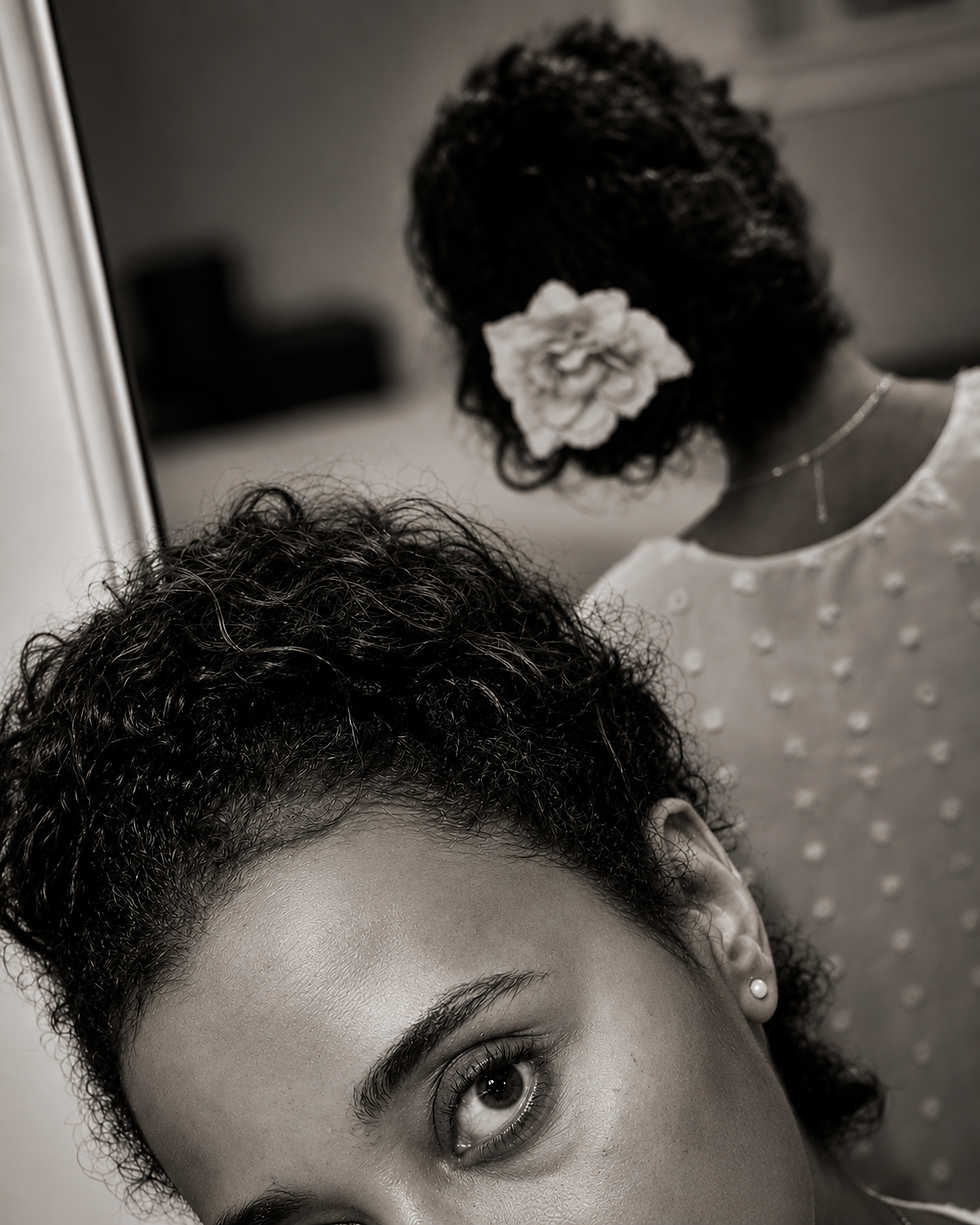


The little girl grew to tell the truth now. Beautiful!